Click On Each Button to be Taken to the Policy Resource
PMSC Uniform (Policy & Info)
Uniform Policy:
U3-U6
As there is only one day of play a week and it is a combined practice/game, players are expected to wear the provided jersey, and encouraged to wear the club shorts and socks with cleats. (U3/U4 can wear running shoes).
U8-U19
Players must wear the provided jersey and socks to their games as per the FIFA Laws of the Game. However, as the shorts provided are not necessarily suitable for all players, players will be allowed to wear their own shorts provided they are all black and fall at the mid-thigh (no short-shorts or spandex)
For practices, players can wear whatever sports gear they desire, however is must be an appropriate t-shirt or tank top (no low cut shirts) and appropriate shorts (no short-shorts or spandex).
All players will follow the PMSC uniform policy. If they do not, coaches will have the right to refuse play time or practice participation.
For more detailed information re: Players’ Equipment, please refer to the Laws of the Game (Section 4, Page 59+ specifically).
Available Now!
Atletico’s 2026 Season Seat Memberships are out now! Season Seat Memberships come with exclusive perks: Each Membership comes with an official Atleti Stadium Scarf, access to all 14 regular season home matches + 2 bonus matches, seat swap flexibility, guaranteed lowest price and much more. Secure your spot today!

Long-Term Player Development (LTPD)
The Petawawa Minor Soccer Association (PMSC) is in full support of the Long-Term Player Development (LTPD) model which is a Canadian Soccer Association (CSA) soccer-specific adaptation of the Long-Term Athlete Development model (LTAD) developed by Canadian Sport Centres. LTAD is a scientific model for periodized athlete training and development that respects and utilizes the natural stages of physical, mental, and emotional growth in athletes, and it has already been adopted by major sports organizations in the United Kingdom, Ireland, and Canada.
LTPD is designed to:
- Promote lifelong enjoyment of physical activity.
- Provide a structured player development pathway.
- Describe best practices for elite player development.
- Create long-term excellence.
Benefits of Long-Term Player Development (LTPD)
LTPD is a program for soccer player development, training, competition, and recovery based on biological age (i.e. physical maturity) rather than chronological age. It is player centred, coach driven, and administration, sport science, and sponsor supported.
LTPD
- Eliminates gaps in the player development system.
- Guides planning for optimal athlete performance at all stages.
- Provides a framework for program alignment and integration, from volunteer club coaches to national and professional teams.
- Follows scientific principles and practical coaching experiences.
Benefits for Players & Parents
- Better understanding of what makes a good soccer program.
- More players learning at their level and having fun.
- Appropriate game and league structures (e.g. size of balls, goals, field etc.).
- More opportunity for players to realize their athletic potential.
- More coaches who are knowledgeable in leading safe, effective practices.
Benefits for Coaches & Clubs
- Information and education on effective coaching and practice methods.
- Guidelines for appropriate game structures.
- Guidelines on appropriate competition levels.
- Established pathways for player development for all levels of ability and ambition.
- Affirmation of best practices for coaches and club administrators.
Benefits for All
- Competitive behaviour is fostered in players, while over-competitive behaviour is discouraged in adults (e.g. coaches and parents).
- Players, parents, coaches, and administrators understand that players are unique and therefore different in interest and aptitude.
- Players stay involved in the sport throughout their lives (as players, coaches, referees or club administrators).
- Soccer grows, and lifelong wellness is promoted for players of all ages, genders, and levels of ability and disability.
The Canadian Soccer LTPD model, Wellness to World Cup is designed to optimize Canadian excellence and lifelong wellness through soccer. By ensuring fun playing experiences for children, a suitable player development pathway for youth and opportunities for lifelong participation for all players regardless of age, gender, ability or disability, LTPD provides a framework for the growth of the beautiful game in Canada.
LTPD – Canadian Soccer Coaches Resources
Moving Up An Age Group
Moving Up an Age Group
A player shall be registered according to their age as of December 31st of their birth year. A player MUST play in their age classification unless it is deemed to be in the best interest of the PMSC, or due to the child’s exceptional ability. All player moves must be reviewed by the PMSC Head Coach and approved by the EOS Technical Director. Players can only move up to the age group immediately before their current age group. The following rules must be taken into account:
- the child must meet the playing ability of the age group they wish to move up to;
- this must be in the best interest of both the player and PMSC;
- a child wanting to move up an age group must not take a spot of a child wishing to register in that age group; and
- only after an assessment made by the PMSC Head Coach or other qualified PMSC affiliated individuals in accordance with OS Policies, can a player be moved up.
Gender, Diversity, Equity, & Inclusion Policies
Additional Gender Equity Resources:
- Canadian Women & Sport
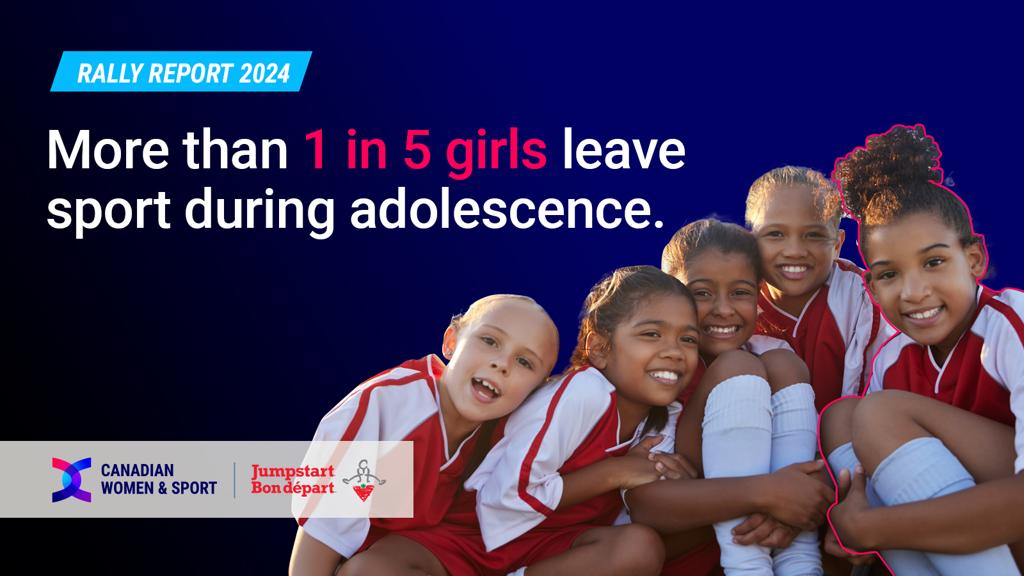
- Rally Report 2024
- Rally Report 2024: Take Action
- Gender Equity LENS e-learning
- Commitment to gender equity by the Federal-Provincial/Territorial Ministers for Sport, Physical Activity and Recreation
- Gender inclusive writing tips
- Actively Engaging Women & Girls: Addressing the Psychosocial Factors
- High Performance Women in Coaching Mentorship Program
- Gender Equity in Coaching
- Recruitment and Best Practices for Women in Coaching
Bursaries
PMSC Bursaries
At the Petawawa Minor Soccer Club we believe in developing not just athletes – but well-rounded individuals who strive for success both on and off the field. That’s why we are proud to offer bursaries to our graduating players who are pursuing post-secondary education.
The Petawawa Minor Soccer Club (PMSC) is pleased to announce the opening of applications for the “2026 Petawawa Minor Soccer Club Bursaries.” We will award 2 bursaries this season, in the amount of $250 each.
These bursaries are intended to support two of our club’s 2025 High School Graduates in achieving their academic goals, while celebrating their achievements and their love for the game of soccer.
Interested individuals are invited to apply via a one page essay answering one important question:
“What has soccer done for you?”
Who Can Apply?
This bursary is open to:
- Current (or past) players of the Petawawa Minor Soccer Club.
- Players who are graduating from a local High School this year.
- Players who have been accepted to, and are attending, post-secondary education in 2026/2027.
How to Apply:
Applicants are asked to submit, via email to admin@petawawaminorsoccer.com, a one page essay answering the question “What has soccer done for you?” Applicants are invited to interpret and answer this question in whichever way they choose. We just ask that their answers illustrate how soccer has played a role in their lives. Application essays may be submitted in English or French.
Applicants are asked to include in their email application the name of the Post Secondary institution and program they are planning to attend, as well as the name of the High School they graduated from.
Deadline and Process:
Application Deadline: 30 May 2026
Applications will be shared with the selection committee, made up of 3 current PMSC Board of Director members, anonymously by the PMSC administrator.
Recipients will be notified via email by August 20th, 2025. Their names will be announced, and their bursaries handed out, at the 2025 PMSC AGM on August 21st, 2025.
Click On Each Button to be Taken to the Policy Resource
Player Health And Safety
Concussion Resources
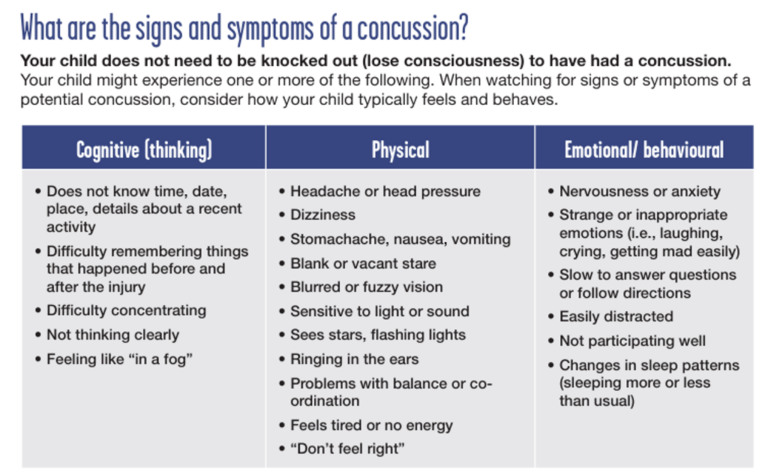
Canada Soccer Concussion Policy
The [Canada Soccer Policy] is based on current evidence and examples of best practice taken from soccer organizations around the world and other sports, including the Football Association, the Scottish FA, World Rugby, and the Canadian Concussion Collaborative. They are consistent with The Canadian Guideline on Concussion in Sport, (Toronto: Parachute, 2017) and the current Consensus Statement on Concussion in Sport issued by the Fifth International Conference on Concussion in Sport, Berlin 2017. The Policy has been reviewed and is approved by Canada Soccer Sports Medicine Committee.
As part of a pre-season concussion education strategy, Canada Soccer recommends:
1. Our players and parents/guardians should review as a minimum, the Summary section of this document (page 3), OR both the Respond and Recognize (pages 5 and 6) sections of this document as part of their soccer registration process.
2. All participants in our sport should be encouraged to familiarize themselves with the entirety of our Concussion Guidelines. Baseline (pre-season) testing of youth (<18 years) and adult recreational athletes using any tool or combination of tools is not required for post-injury care of those who sustain a suspected or diagnosed concussion and is not recommended.
Rowan’s Law
The goal of Rowan’s Law is to protect amateur athletes by improving concussion safety on the field of play to help prevent similar tragedies from happening in the future. The legislation includes a number of requirements for sport organizations, athletes, parents, coaches, team trainers and officials to help mitigate concussions in sport.

 A concussion is a brain injury that can’t be seen on routine X-rays, CT scans or MRIs. It affects the way a person may think and remember things, and can cause a variety of symptoms. Any blow to the head, face or neck, or a blow to the body that jars your head, could cause a concussion.
The following is a copy of the Table of Contents from Parachute.ca – all links are outgoing and will take you away from PMSC to the Parachute website.
Additional Concussion Resources
A Nurse’s Guide to Sports Concussions | CEUfast.com Blog
Special thank you to one of the Petawawa Public Library summer program students, Oliver, for passing this one along to us 🙂
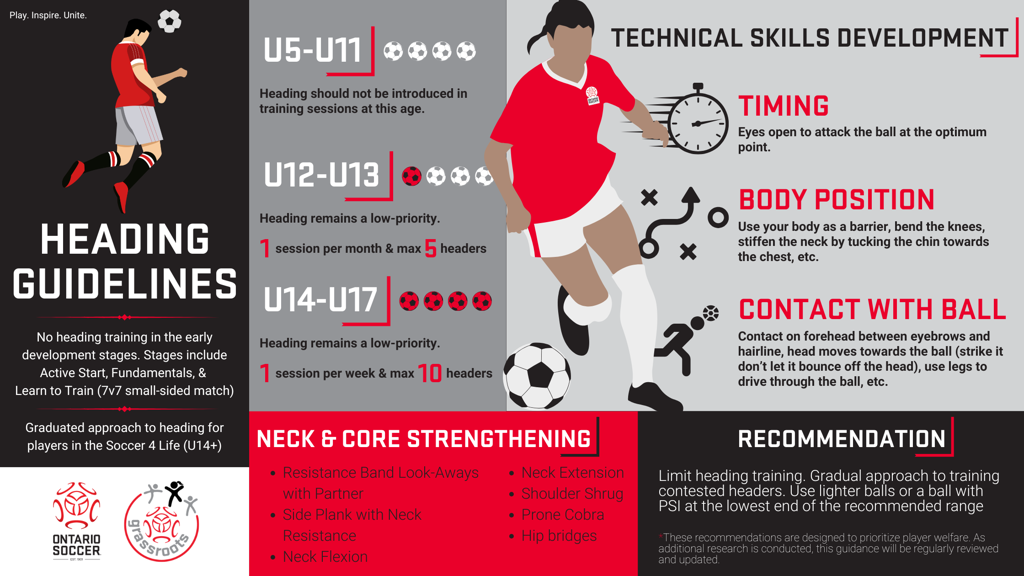
Heading Guidelines
Long-Term Player Development (LTPD)
The Petawawa Minor Soccer Association (PMSC) is in full support of the Long-Term Player Development (LTPD) model which is a Canadian Soccer Association (CSA) soccer-specific adaptation of the Long-Term Athlete Development model (LTAD) developed by Canadian Sport Centres. LTAD is a scientific model for periodized athlete training and development that respects and utilizes the natural stages of physical, mental, and emotional growth in athletes, and it has already been adopted by major sports organizations in the United Kingdom, Ireland, and Canada.
LTPD is designed to:
- Promote lifelong enjoyment of physical activity.
- Provide a structured player development pathway.
- Describe best practices for elite player development.
- Create long-term excellence.
Benefits of Long-Term Player Development (LTPD)
LTPD is a program for soccer player development, training, competition, and recovery based on biological age (i.e. physical maturity) rather than chronological age. It is player centred, coach driven, and administration, sport science, and sponsor supported.
LTPD
- Eliminates gaps in the player development system.
- Guides planning for optimal athlete performance at all stages.
- Provides a framework for program alignment and integration, from volunteer club coaches to national and professional teams.
- Follows scientific principles and practical coaching experiences.
Benefits for Players & Parents
- Better understanding of what makes a good soccer program.
- More players learning at their level and having fun.
- Appropriate game and league structures (e.g. size of balls, goals, field etc.).
- More opportunity for players to realize their athletic potential.
- More coaches who are knowledgeable in leading safe, effective practices.
Benefits for Coaches & Clubs
- Information and education on effective coaching and practice methods.
- Guidelines for appropriate game structures.
- Guidelines on appropriate competition levels.
- Established pathways for player development for all levels of ability and ambition.
- Affirmation of best practices for coaches and club administrators.
Benefits for All
- Competitive behaviour is fostered in players, while over-competitive behaviour is discouraged in adults (e.g. coaches and parents).
- Players, parents, coaches, and administrators understand that players are unique and therefore different in interest and aptitude.
- Players stay involved in the sport throughout their lives (as players, coaches, referees or club administrators).
- Soccer grows, and lifelong wellness is promoted for players of all ages, genders, and levels of ability and disability.
The Canadian Soccer LTPD model, Wellness to World Cup is designed to optimize Canadian excellence and lifelong wellness through soccer. By ensuring fun playing experiences for children, a suitable player development pathway for youth and opportunities for lifelong participation for all players regardless of age, gender, ability or disability, LTPD provides a framework for the growth of the beautiful game in Canada.
LTPD – Canadian Soccer Coaches Resources
Moving Up An Age Group
Moving Up an Age Group
A player shall be registered according to their age as of December 31st of their birth year. A player MUST play in their age classification unless it is deemed to be in the best interest of the PMSC, or due to the child’s exceptional ability. All player moves must be reviewed by the PMSC Head Coach and approved by the EOS Technical Director. Players can only move up to the age group immediately before their current age group. The following rules must be taken into account:
- the child must meet the playing ability of the age group they wish to move up to;
- this must be in the best interest of both the player and PMSC;
- a child wanting to move up an age group must not take a spot of a child wishing to register in that age group; and
- only after an assessment made by the PMSC Head Coach or other qualified PMSC affiliated individuals in accordance with OS Policies, can a player be moved up.
Gender, Diversity, Equity, & Inclusion Policies
Additional Gender Equity Resources:
- Canadian Women & Sport
- Rally Report 2024
- Rally Report 2024: Take Action
- Gender Equity LENS e-learning
- Commitment to gender equity by the Federal-Provincial/Territorial Ministers for Sport, Physical Activity and Recreation
- Gender inclusive writing tips
- Actively Engaging Women & Girls: Addressing the Psychosocial Factors
- High Performance Women in Coaching Mentorship Program
- Gender Equity in Coaching
- Recruitment and Best Practices for Women in Coaching
Weather Policies
Extreme Temperature Guidelines
From the Eastern Ontario Soccer League: Guidelines for Extreme Temperatures
Estimates of temperature and humidex will be taken as provided/predicted by Environment Canada (EC) as provided up to 7 hours prior to game kick-off times.
Breaks will be at approximately the quarters of game time, preferably at natural stoppages in play and will allow unlimited substitutions at that time. Break should be a minimum of 2 minutes and a maximum of 3 minutes.
A Coach or Referee can set a water break when the temperature at Kick-off time is over 28 degrees Celsius or humidex estimated over 30 degrees Celsius before kick-off time.
The EOSL mandates water breaks at approximately the quarters of game time when the temperature exceeds 34 degrees Celsius or humidex of 36 degrees Celsius.
The EOSL mandates cancelling matches where the temperature at the start of play is predicted to be in excess of 37 degrees Celsius or humidex of 39 degrees Celsius at kick-off time.
PMSC Humidex Policy
– Team practices for U10 and older are held at the discretion of the team coach.
– For PMSC Small Sided games and VUSL House League games:
- U4, U6, U8: If the humidex is equal to or greater than 37C, 90 minutes before scheduled kick off, the game shall be cancelled.
- U10 and U12 only: If the forecasted humidex is equal to or greater than 37C at 4pm the day of the game, the game shall be cancelled.
- U14, U16, U18 only: If the forecasted humidex is equal to or greater than 40C at 4pm the day of the game, the game shall be cancelled.
- Any game started, that according to this policy should not have been, shall be forfeited by the Away Team and the score shall be recorded as 2-0 in favour of the Home Team.
- Cancelled games may be rescheduled by the Individual Clubs affected.
Notice of High Humidex Cancellation
- If the Humidex has not decreased below 37C for U6-U12 (40C for U14/U16/U18) then the cancellation policy is triggered.
- The VUSL shall post a Cancellation Notice on their website and issue a High Humidex Cancellation e-mail to the VUSL Club Contact for each individual Club by at least 4pm.
- PMSC will then distribute this notification to any convenors whose age group is playing that evening and the ref scheduler to notify the refs.
- The convenors are responsible for letting the respective coaches know, and the coaches to notify their players.
- This policy may be modified for the House League Festival/Tournament.
Policy Adopted 21-10-2019
See also: “Don’t Get Beat by the Heat” from Ontario Soccer
Lightning Safety/Severe Weather Policy
When thunder roars, go indoors!
The safety of players, coaches, management and spectators is the primary concern in any weather event that occurs during all matches sanctioned by Canada Soccer. By understanding and following the below information, the safety of everyone shall be greatly increased. Ultimately, the referee has the final say over delaying or restarting a match due to weather. Waiting to stop play or not waiting to start play may result in a serious injury or loss of life. Referees are expected to act responsibly when dealing with such events during matches they are controlling
If you can hear thunder, you can get hit by lightning. As soon as you hear thunder, quickly get to a safe location. More people are struck before and after a thunderstorm than during one. Stay inside for 30 minutes after the last rumble of thunder.
See also: Canada Soccer’s Lightning Safety/Severe Weather Policy
Additional Information
Please note the following recommendations from Environment Canada:
- To plan for a safe day, check the weather forecast first. If thunderstorms are forecast, avoid being outdoors at that time or make an alternate plan. Identify safe places and determine how long it will take you to reach them.
- Watch the skies for developing thunderstorms and listen for thunder. As soon as you hear thunder, quickly get to a safe location. If you can hear thunder, you are in danger of being hit by lightning. More people are struck before and after a thunderstorm than during one.
- Get to a safe place. A safe location is a fully enclosed building with wiring and plumbing. Sheds, picnic shelters, tents or covered porches do NOT protect you from lightning. If no sturdy building is close by, get into a metal-roofed vehicle and close all the windows.
- Do not handle electrical equipment, telephones or plumbing. These are all electrical conductors. Using a computer or wired video game system, taking a bath or touching a metal window frame all put you at risk of being struck by lightning. Use battery-operated appliances only.
- If caught outdoors far from shelter, stay away from tall objects. This includes trees, poles, wires and fences. Take shelter in a low-lying area but be on the alert for possible flooding. Be aware of how close lightning is occurring. Thunder always accompanies lightning, even though its audible range can be diminished due to background noise in the immediate environment and its distance from the observer.
- When larger groups are involved, the time needed to properly evacuate an area increases. As time requirements change, the distance at which lightning is noted and considered a threat to move into the area must be increased.
- Know where the closest “safe structure or location” is to the field or playing area and know how long it takes to get to that safe structure or location. Safe structure or location is defined as:
- Any building normally occupied or frequently used by people, i.e., a building with plumbing and / or electrical wiring that acts to electrically ground the structure. Avoid using shower facilities for safe shelter and do not use the showers or plumbing facilities during a thunderstorm.
- In the absence of a sturdy, frequently inhabited building, any vehicle with a hard metal roof (not a convertible or golf cart) and rolled-up windows can provide a measure of safety. A vehicle is certainly better than remaining outdoors. It is not the rubber tires that make a vehicle a safe shelter, but the hard metal roof which dissipates the lightning strike around the vehicle. Do not touch the sides of any vehicle!
- If no safe structure or location is within a reasonable distance, find a thick grove of small trees surrounded by taller trees or a dry ditch. Assume a crouched position on the ground with only the balls of the feet touching the ground, wrap your arms around your knees and lower your head. Minimize contact with the ground because lightning current often enters a victim through the ground rather than by a direct overhead strike. Minimize your body’s surface area and the ground! Do not lie flat! If unable to reach safe shelter, stay away from the tallest trees or objects such as light poles or flag poles), metal objects (such as fences or bleachers), individual trees, standing pools of water, and open fields. Avoid being the highest object in a field. Do not take shelter under a single, tall tree.
- Avoid using the telephone, except in emergency situations. People have been struck by lightning while using a land-line telephone. A cellular phone or a portable remote phone is a safe alternative to land-line phones, if the person and the antenna are located within a safe structure or location, and if all other precautions are followed.
When considering resumption of any athletics activity, wait at least thirty (30) minutes after the last flash of lightning or sound of thunder before returning to the field.
First aid for lightning victims
Prompt, aggressive CPR has been highly effective for the survival of victims of lightning strikes.
- Lightning victims do not carry an electrical charge and can be safely handled.
- Call for help. Victims may be suffering from burns or shock and should receive medical attention immediately. Call 9-1-1 or your local ambulance service.
- Give first aid. If breathing has stopped, administer cardio-pulmonary resuscitation (CPR). Use an automatic external defibrillator if one is available.
For additional information the following websites are helpful:
Air Quality Safety
Air quality decisions will be based on a club-by-club basis using the following:
- Local Air Quality Health Index (AQHI) will be observed at 4:00 pm.
- If the local AQHI is 7 or higher, home games shall be rescheduled.
- Match Officials maintain the right to abandon the game under LOTG 5.7 should they feel conditions are not safe or have become worse.
- Re: Competitive Games. Please refer to the EOSL’s Air Quality Policy
Safe Sport

For all urgent situations requiring immediate intervention, contact:
- Police: 9-1-1
- Canada Suicide Prevention Service: 1-833-456-4566 (In Quebec: 1-866-277-3553)
- Kids Help Phone: 1-800-668-6868
- Looking for a crisis resource near you? Local Resources & Support
Canada Soccer Safe Sport Roster
As of March 1, 2023, Canada Soccer formally adopted the Universal Code of Conduct to Protect and Address Maltreatment in Sport (UCCMS) and joined the Abuse-Free Sport Program.
This goal of this core code of conduct document being to “advance a respectful sport culture that delivers quality, inclusive, accessible, welcoming and safe sport experiences.”
For more information, please visit Ontario Soccer and/or UCCMS.
Abuse-Free Sport
“Abuse-Free Sport is Canada’s Independent system for preventing and addressing maltreatment in sport. [Their] ultimate goal is to work with others throughout the Canadian sport system to ensure that every participant – no matter the sport, the level, or the role – has a safe, positive and enriching experience.”
Additional Safe-Sport Resources
Abuse-Free Sport Helpline
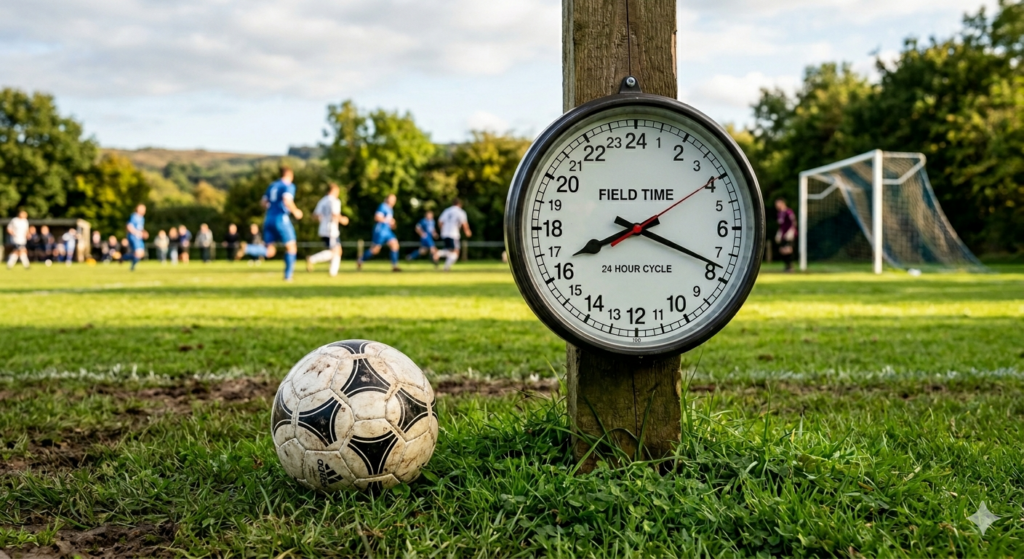
24-Hour Cool Down
24-Hour Cool Down
It is recommended that coaches/parents/players wait 24 hours before approaching the League with concerns. This is to provide time to “cool down” and be able to look at events with a fresh perspective the next day.
Click On Each Button to be Taken to the Policy Resource
How To Become A Volunteer
Canada Soccer, in partnership with provincial organizations, has implemented a national Club Licensing Program to support Safe Sport and consistent standards across Canada.
As part of this program, all clubs affiliated with Ontario Soccer must meet specific requirements to be recognized as a Quality Soccer Provider.
This includes minimum standards for all coaches and volunteers involved in recreational programming.
Mandatory Requirements
All team officials (coaches, assistants, managers) must complete the following:
1. Coaching Certification
Coaches must complete the appropriate Grassroots Coaching Course based on the age group they are working with:
Important Notes:
- The Coaching in Canada module is included in all courses
- Full course registration is required
- PMSC will reimburse all course fees
2. Respect in Sport – Activity Leaders
All team officials must complete:
Respect in Sport for Activity Leaders
- Valid for 5 years
- Approx. 2.5 hours, completed online
- Certification is transferable from other sports (e.g., Hockey Canada)
Reimbursement: Available upon submission of proof of completion
3. Background Check & Vulnerable Sector Check (VSC)
- Required for all volunteers aged 16 and older
- Must be renewed every 3 years
- An Annual Disclosure Form is required if the check is still valid
Important: Processing times may be lengthy.
Early application is strongly recommended.
4. Pre-Season Orientation
All coaches and volunteers are required to attend a pre-season orientation session covering:
- Club policies and expectations
- Safe Sport guidelines
- Roles and responsibilities
Volunteer Screening
PMSC maintains a comprehensive screening process to ensure a safe environment for all participants.
All volunteers are required to review the:
This process is designed to:
- Protect players
- Support volunteers
- Ensure compliance with national Safe Sport standards
Vulnerable Sector Check (VSC) Process
How to Apply
A police check is required to volunteer with the PMSC.
- OPP Police Record Checks are no longer completed at the Detachment, applicant must apply online. Questions regarding OPP Police Record Checks should be directed to customer service by phoning 1-833-909-0057 or by email at opp.virtualdesk@tritoncanada.ca.” – source: Ontario Provincial Police – Police Record Checks
- Residents of Garrison Petawawa must apply through Military Police
Required Documentation
Applicants must provide:
- A personalized letter from PMSC (provided after registration)
- Two valid pieces of identification (one must include a photo)
Acceptable Photo Identification:
- Driver’s License
- Passport
- Military ID
- Ontario Photo Card
- Permanent Resident Card
- NEXUS Card
Acceptable Non-Photo Identification:
- Birth Certificate
- Outdoors Card
- Immigration Documents
Reimbursement
PMSC will reimburse volunteers for:
To request reimbursement:
- Complete the reimbursement form
- Submit proof of payment
Submission of Documents
Once all requirements are completed, please submit the following:
- Coaching certification
- Respect in Sport certificate
- Background check documentation
📧 Email: volunteer@petawawaminorsoccer.com
Optional (Advanced) Training
The following certifications are recommended for coaches working in competitive environments or attending sanctioned tournaments:
- Making Ethical Decisions
- Making Headway in Soccer
- Emergency Action Plan
- Understanding the Rule of Two
These courses are available through the Coaching Association of Canada.
Coaching Courses (2026)
Courses are hosted by regional clubs, including:
- West Carleton Soccer Club (Woodlawn)
- Ottawa South United Soccer Club (Manotick)
Course offerings include:
- FUNdamentals
- Learn to Train
- Soccer for Life
For current schedules and registration:
- Visit CoachCentre
- District: Eastern Ontario District Soccer Association
Additional Information
- Courses require minimum enrollment to run
- PMSC may coordinate additional sessions based on demand
- All club coaches are eligible for full course reimbursement
Volunteer Letter for Police Check
If you require a letter from the PMSC to complete your Vulnerable Sector police check please email our Volunteer Coordinator:
Chantel Reid
volunteer@petawawaminorsoccer.com
The Volunteer Coordinator and the Head Coach may also be contacted with any other questions.
George Al Haddad
headcoach@petawawaminorsoccer.com
Click On Each Button to be Taken to the Policy Resource
Click On Each Button to be Taken to the Policy Resource
Click On Each Button to be Taken to the Policy Resource
How to Make a Complaint
NEW – Independent Third Party Complaints Management Service
Ontario Soccer now includes the TP Complaints Management Service for members – effective August 23, 2024.
ALIAS Solutions
This “service” will allow individuals to report improper conduct through the ALIAS reporting mechanism (web and phone) and ensures that safe sport (maltreatment) reports are managed independently through ALIAS’ independent third-party case management.
The EOSL (Eastern Ontario Soccer League) is the Governing Body for Soccer in Eastern Ontario.
Member organizations and their respective members, staff, and officials must abide by the Ontario Soccer Code of Conduct and Ethics (the code).
In the instance where you feel that an organization or individual has violated the code you have the right to file a complaint.
Ontario Soccer has provided a new Third Party Service, ALIAS Solutions, to handle complaints.
Alias follows the framework of the Code of Conduct and Ethics available in the Ontario Soccer Policies (appendix B1).
- To report a complaint, access the ALIAS “Report a Complaint” link or call 1-833-834-0614 posted on the Ontario Soccer website or at our district, EOSL‘s website.
- Once an individual submits a report:
- ALIAS’ team receives the report and determines the next steps to resolution based on Ontario Soccer Policies (appendix B1)
- ALIAS manages the case and involves external parties when needed.
- Cases are handled with the utmost confidentiality and compassion.
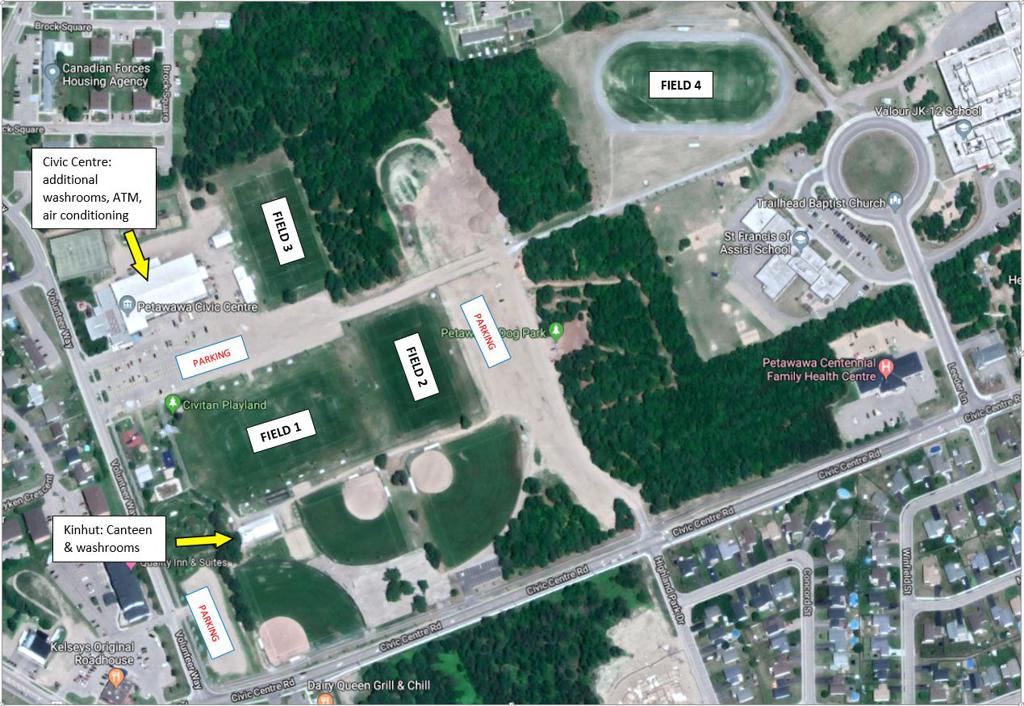
The Petawawa Minor Soccer League has the use of four fields.
Fields 1-3 are located at Civic Center: 16 Civic Centre Rd, Petawawa, ON
Field 4 is located at Valour School: 19 Leeder Ln, Petawawa, ON
U3/4 and U6 Fields – Located on Field 1
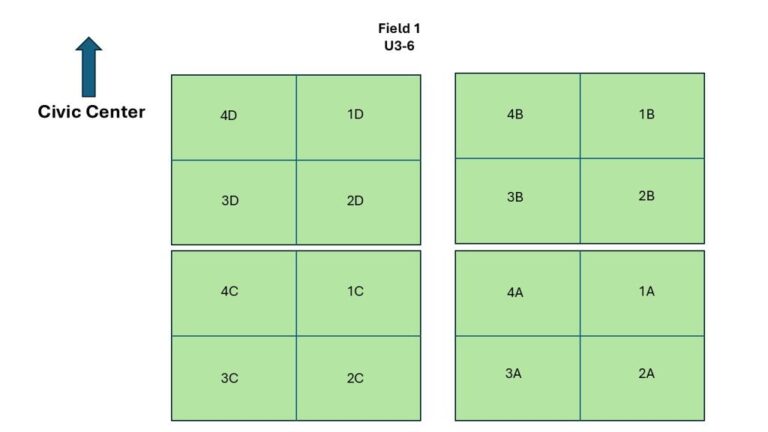
U8 and U10 Fields – Located on Field 3
U12 Fields – Located on Field 2
Jumpstart
“Jumpstart is more than just about getting kids active. It’s about giving kids from families in financial need the same chance to participate as their neighbors, their classmates and their friends.”
The PMSC is happy to support the Jumpstart program through Canadian Tire. Financial assistance may be available for those who qualify. To apply and learn more, visit Jumpstart.
If you apply for Jumpstart, you must notify the PMSC Administrator to obtain a code to allow for non-payment. If you register without the code, you will be required to submit payment at time of registration.
If you have applied for Jumpstart, there will be an option to select “Jumpstart” as a payment method during your registration in PowerUp.
Please note that Jumpstart payments must be received by the club prior to your player participating in the season to which you have registered them.
We appreciate your understanding of this policy.